Project Overview
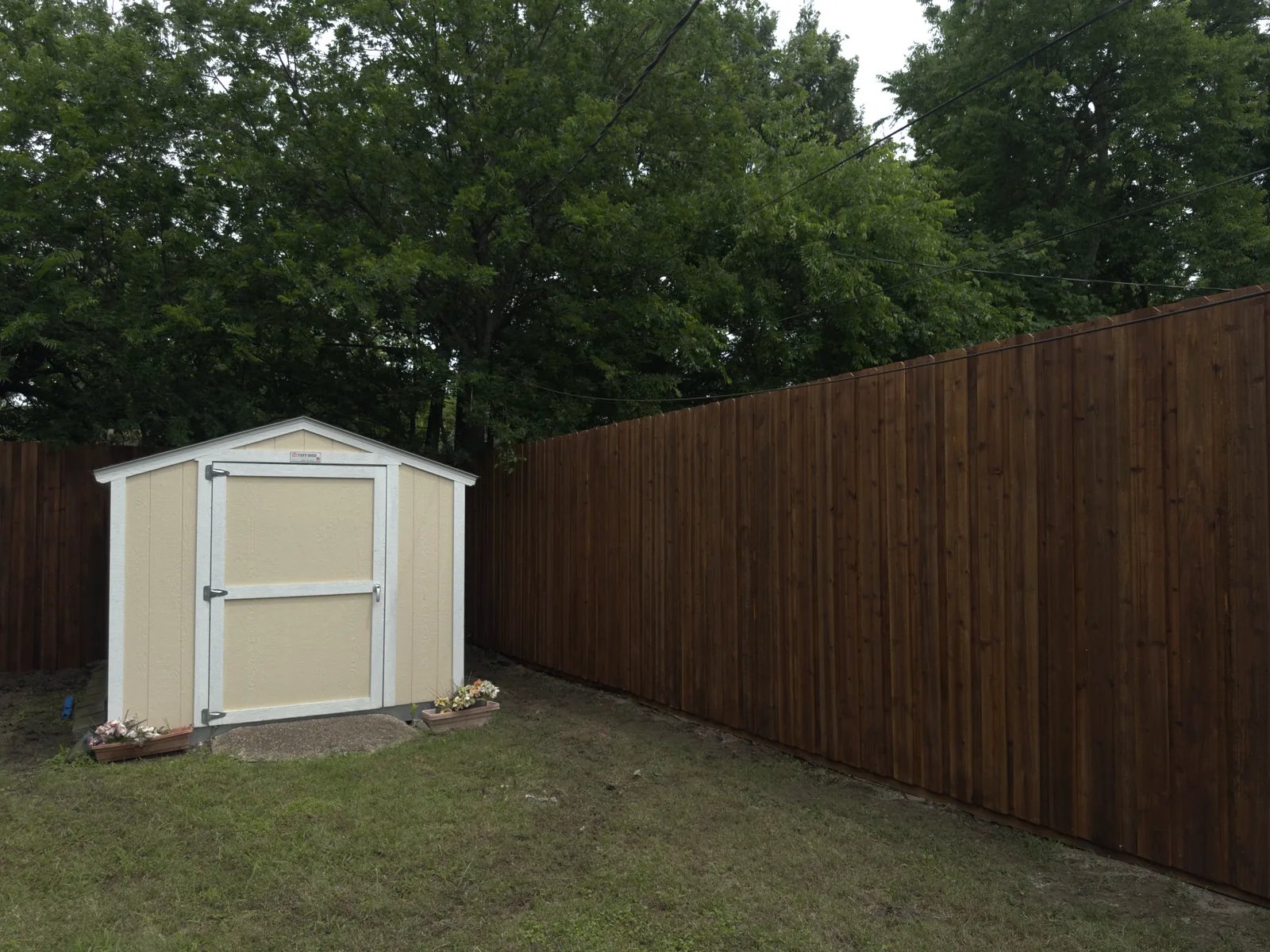
This residential project in Grand Prairie, TX replaced the perimeter fence around a backyard with a pool and a mature tree
line. The existing fence came out and linear feet of 8 ft cedar went up across five runs.
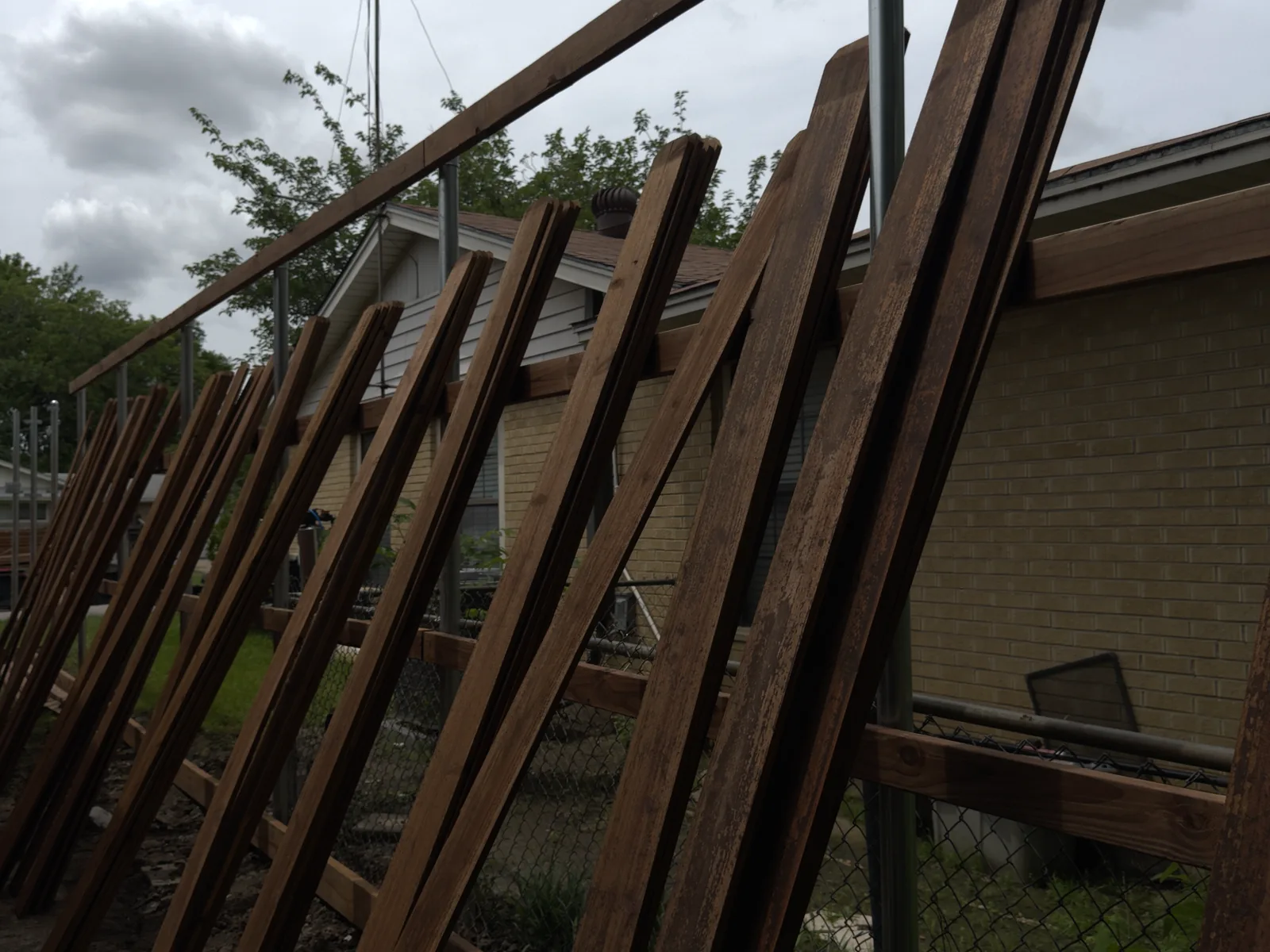
The build uses 1x6 cedar pickets with a dog-ear top, set side by side on pressure-treated rails and carried on
galvanized metal posts. A pressure-treated baseboard runs at grade along the full perimeter, and two gates were built
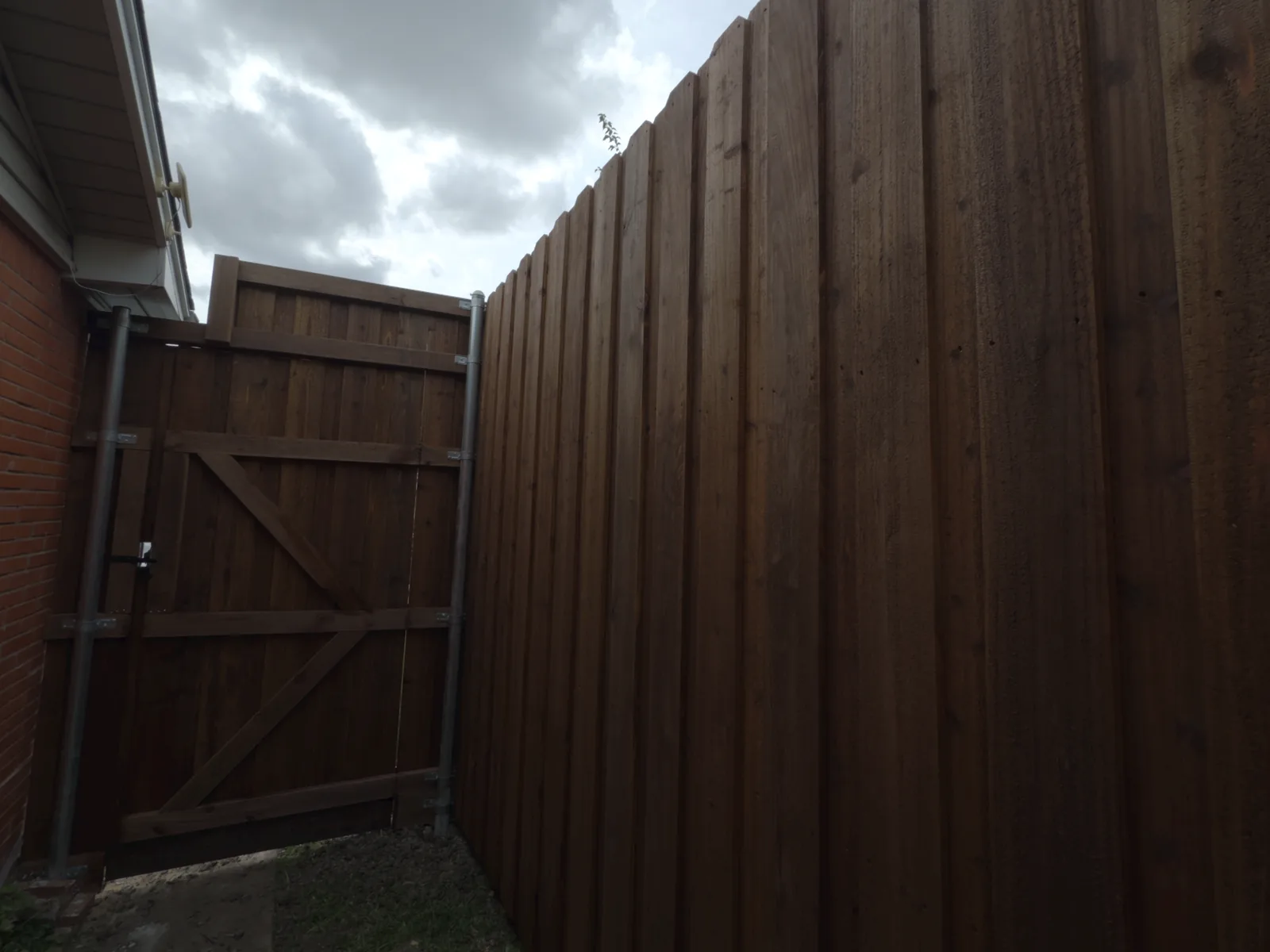
in, including a double gate wide enough to bring equipment through. The completed fence was stained.
Scope and Deliverables
• Site assessment: All five runs were measured around the pool area and the mature tree line at the rear of the
property.
• Utility marking: Texas 811 was called before digging. The estimate records wires, gas, pipes or hoses near the
fence line.
• Fence removal: The existing fence was removed and hauled off the property.
• Post installation: Galvanized metal posts were set in concrete across the full 266 feet.
• Rail framing: Pressure-treated rails were fastened to the posts to carry the pickets.
• Baseboard installation: A pressure-treated baseboard was run at grade along the full perimeter.
• Picket installation: 1x6 cedar pickets with a dog-ear top were installed side by side to full 8 ft height.
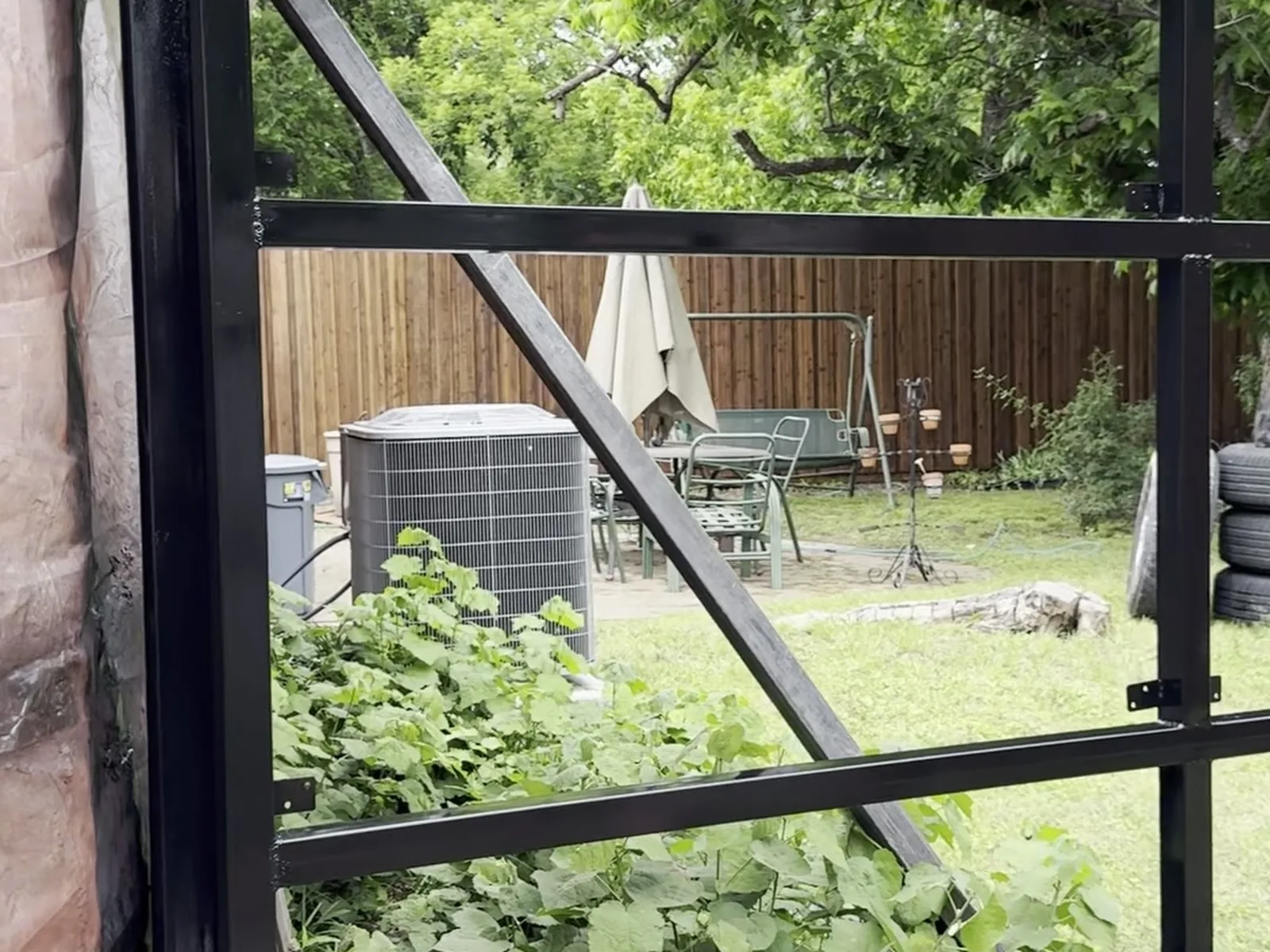
• Double gate: One double gate was built with arched bracing and heavy black strap hinges, wide enough for
equipment access.
• Second gate: A second gate was built into the run.
• Stain: The completed fence was stained.
• Final cleanup: The work area was inspected and cleaned after installation.
Timeline and Quality
At 8 feet with 266 feet of run, the frame matters more than the pickets. An 8 ft panel catches roughly a third more
wind than a 6 ft one, and it carries that load back to the posts — which is why this fence sits on galvanized metal posts
set in concrete rather than wood in the ground. Wood posts are the component that fails first on a tall fence in North
Texas clay: the soil moves through the wet and dry cycle, the post rots at the soil line, and the fence starts leaning
long before the pickets have worn out.
The double gate is the other place a tall fence gets tested. A gate leaf at 8 feet is heavy, and weight plus a long lever
arm is what makes gates drop until they scrape. This one is arch-braced across each leaf and hung on three heavy
black strap hinges per side rather than light residential hardware. The baseboard along the base does the quieter
work: it keeps the picket ends off the soil around a pool yard that gets watered and splashed more than most.
Outcome and Benefits
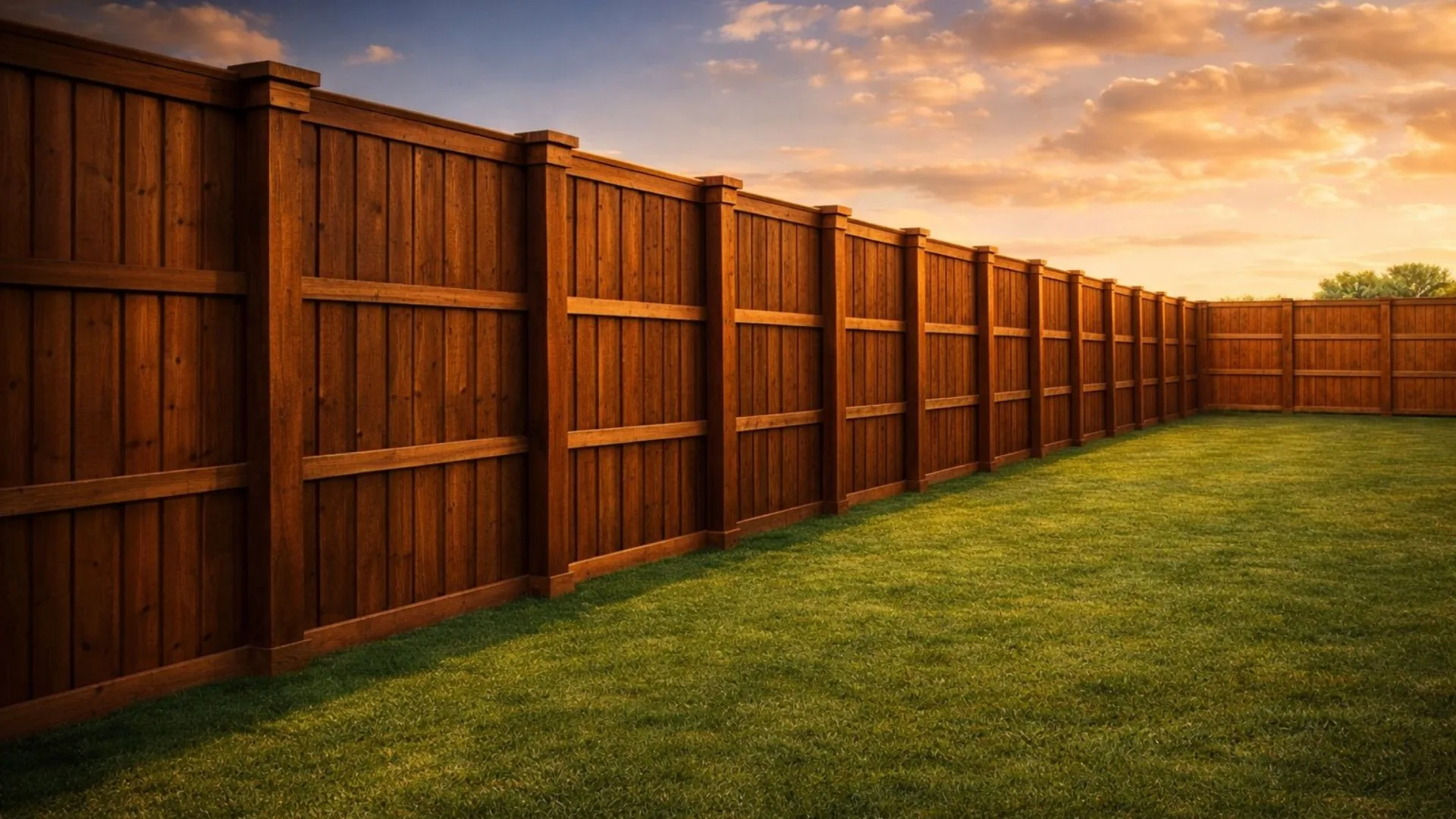
• Full-height privacy: 8 ft of cedar screens a pool backyard from neighbouring properties and second-storey views.
• Equipment access: The double gate opens wide enough to bring equipment into the backyard without going
through the house side.
• Wind-rated frame: Galvanized metal posts in concrete carry the extra load an 8 ft panel generates.
• No wood in the ground: Metal posts remove the component that usually fails first on a tall fence in clay soil.
• Protected picket ends: The pressure-treated baseboard keeps the cedar off the soil around a pool yard.
• Consistent perimeter: One material and one stain across 266 feet and five runs.
• Gates built to last: Arch bracing and heavy strap hinges resist the sag that tall gates develop.