Project Overview
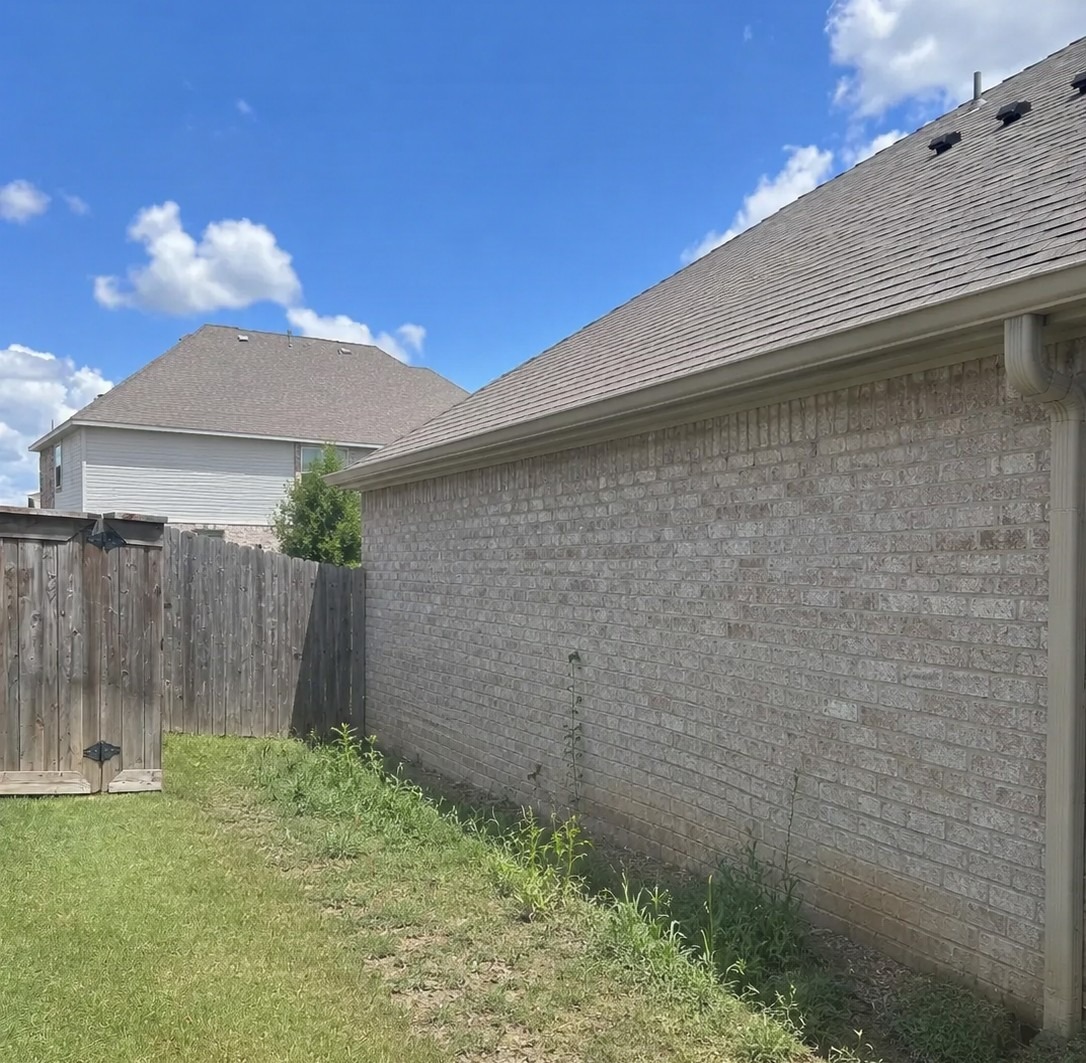
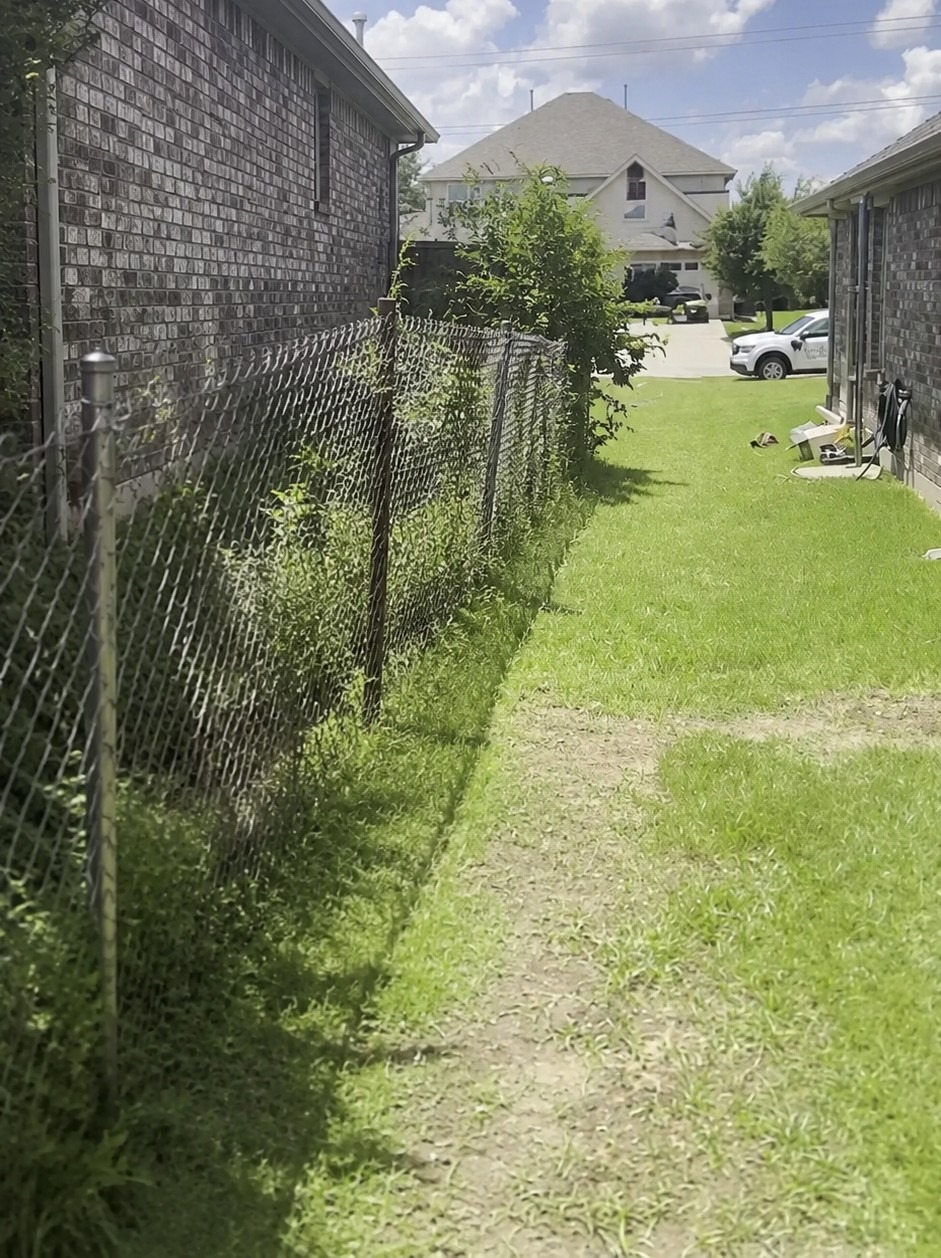
This residential project in Grand Prairie, TX rebuilt 139 linear feet of fence across five runs — 63 feet, 39 feet, 19 feet
and two 9-foot sections tying into the house. The old pickets, rails and baseboard came off and were hauled away.
What stayed were the posts: they were sound and already set, so the new fence was built on them rather than
starting the perimeter over from the ground up.
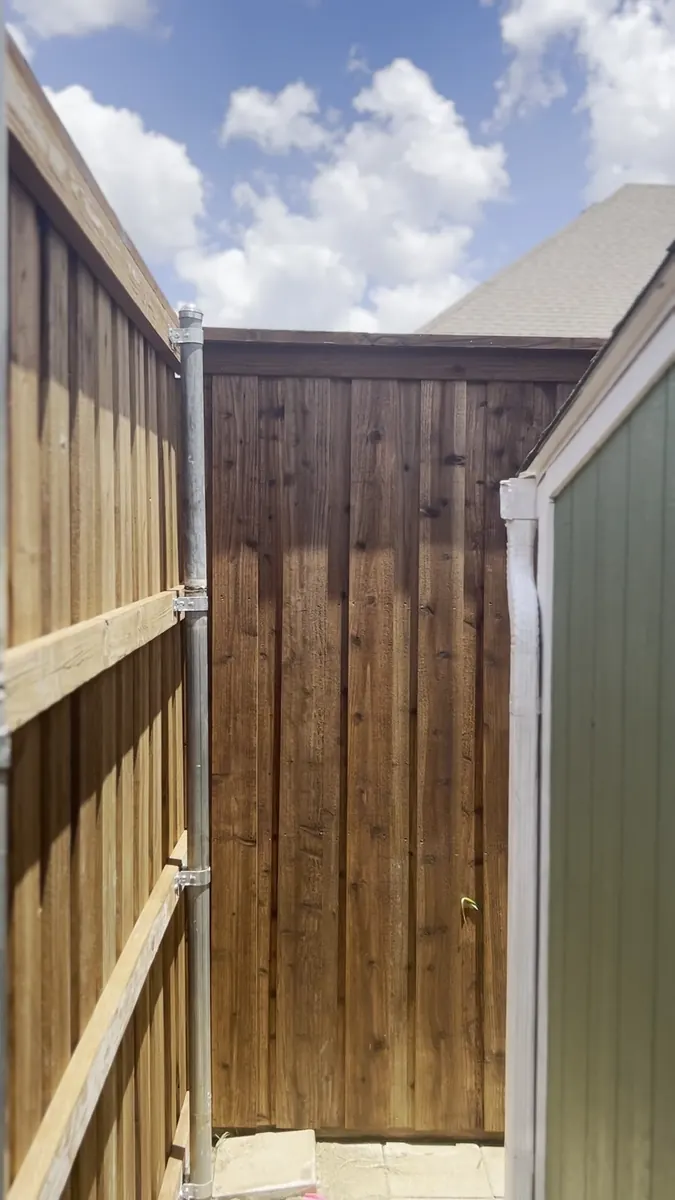
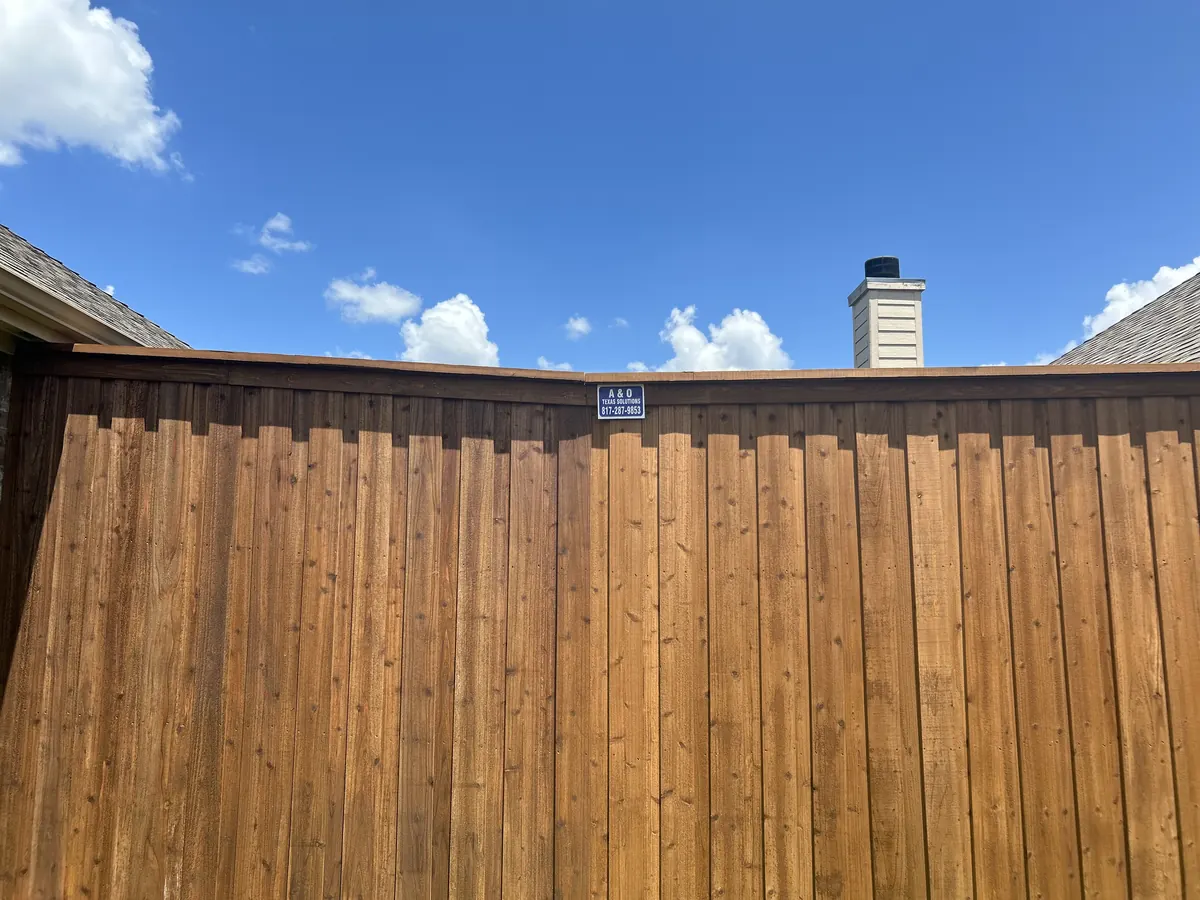
Everything above the posts is new. 1x6 cedar pickets were installed in a board-on-board pattern on new 2x4 pressuretreated rails, with a 2x6 pressure-treated baseboard at grade, a 2x6 cedar cap and 1x4 cedar trim along the top, and
one new gate hung with black strap hinges and a latch. The finished fence was stained.
Scope and Deliverables
• Site assessment: The five runs were measured and the existing posts were inspected to confirm they were sound
enough to carry a new fence.
• Utility marking: Texas 811 was called before any digging. The estimate records wires, gas, pipes or hoses near
the fence line.
• Demolition: The existing pickets, rails and baseboard were removed and hauled off the property.
• Post reuse: The existing posts were retained and the new fence was built onto them.
• Rail framing: New 2x4 pressure-treated rails were fastened across the existing posts.
• Baseboard installation: A new 2x6 pressure-treated baseboard was run at grade along the full length.
• Board-on-board pickets: 1x6 cedar pickets were installed in an overlapping board-on-board pattern, each
checked with a level as it went on.
• Cap and trim: A 2x6 cedar cap was fitted along the top with 1x4 cedar trim beneath.
• Gate build: One new gate was framed and hung with black strap hinges and a latch.
• House tie-ins: The two 9-foot sections were fitted where the fence meets the house.
• Stain: The completed fence was stained.
• Haul-off: All demolition debris was hauled away at no additional charge.
Timeline and Quality
Rebuilding on existing posts is the least glamorous option on a fence quote and often the right one. Posts are the
expensive part of a fence in labor terms — digging, setting, waiting on concrete — and if they are plumb and solid
there is no reason to pull them out to sell a bigger job. The saving goes into what the homeowner actually sees: 1x6
cedar instead of thin pickets, a real 2x6 cedar cap with trim, a pressure-treated baseboard, and stain over the whole
thing.
The trade-off is worth stating honestly. A fence is only as straight and as long-lived as the posts under it, so reusing
them means the new work inherits whatever life those posts have left. That is why the inspection comes first and why
A&O’s warranty covers the new labor and materials but not posts it did not install. On this property the posts were
sound, which is what made the approach the sensible one rather than a shortcut.
Outcome and Benefits
• Full rebuild above grade: New pickets, rails, baseboard, cap and trim mean everything visible is new.
• Cost focused on the visible fence: Reusing sound posts put the budget into cedar, cap detail and stain instead of
re-digging a perimeter that did not need it.
• Full privacy: The board-on-board overlap holds coverage as the cedar seasons.
• Finished top edge: The 2x6 cedar cap with 1x4 trim closes the top and sheds water off the picket end grain.
• Protected picket ends: The pressure-treated baseboard keeps the bottoms off the soil.
• New gate and hardware: One new gate on black strap hinges replaces the old access point.
• Less waste: Keeping serviceable posts in the ground means less demolition, less haul-off and a shorter job.