Project Overview
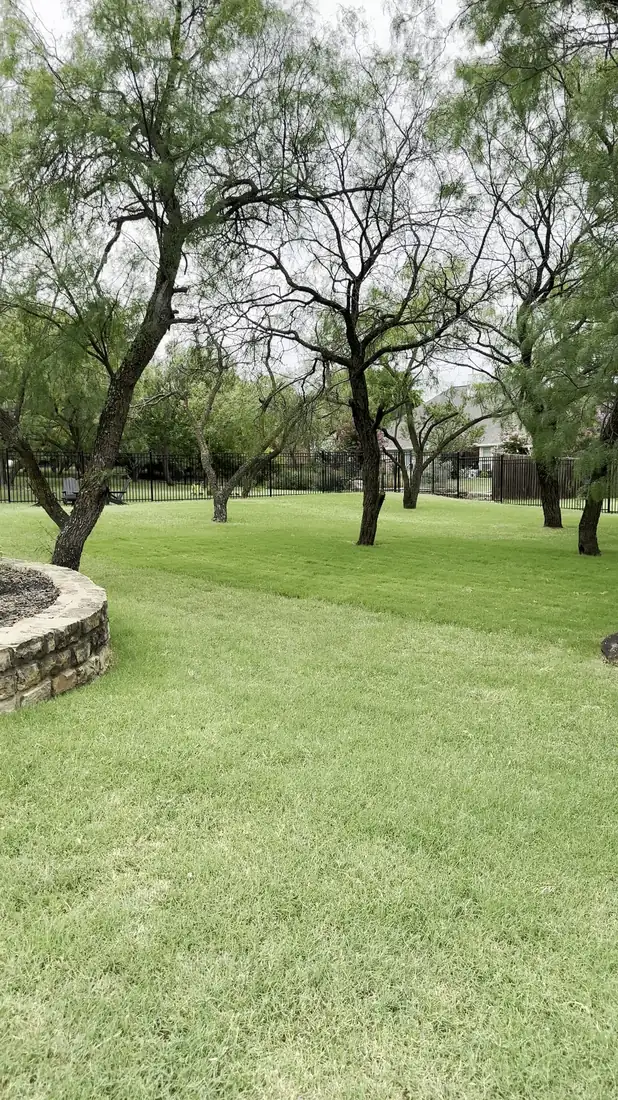
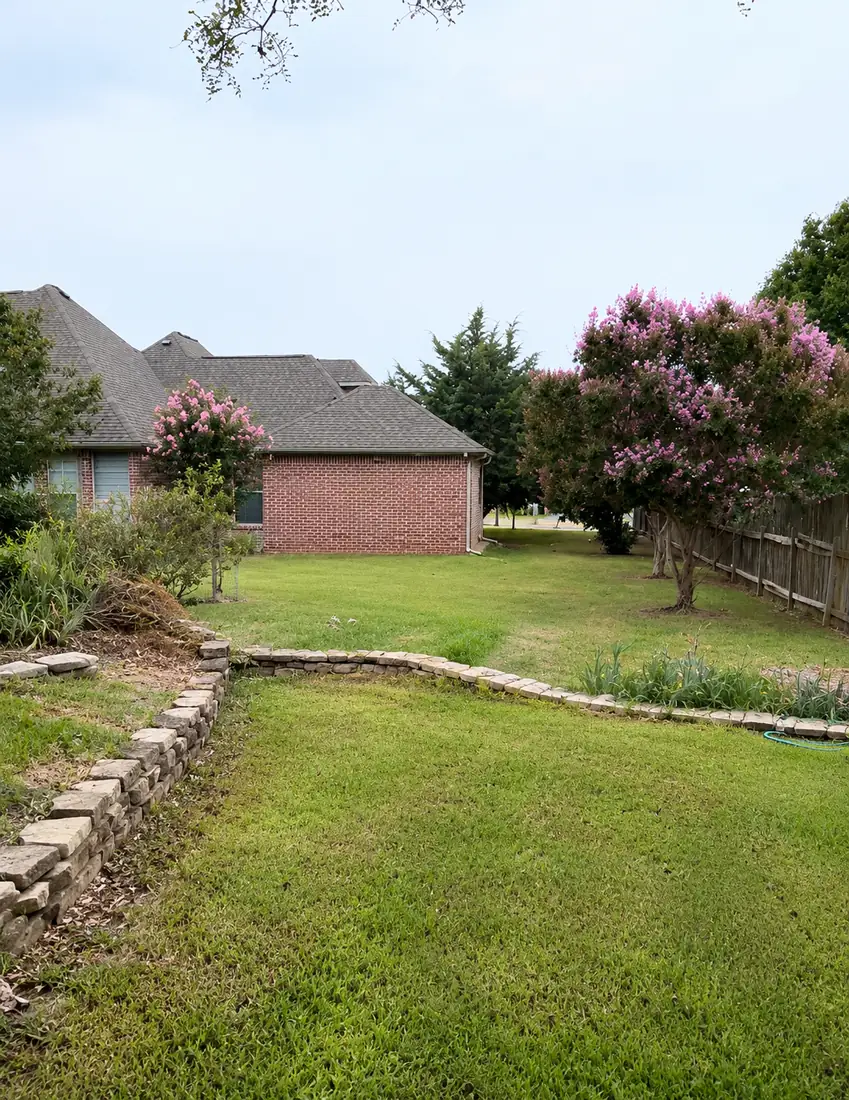
This residential project in Cedar Hill, TX replaced a weathered wood fence on a property that backs onto a landscaped
greenbelt. The old fence had grayed and started to lean, and it walled off a view worth keeping. Approximately 134
linear feet of 6 ft rackable wrought iron went up in its place across three runs — 84 feet along the rear boundary, plus
28-foot and 22-foot sections returning toward the house.
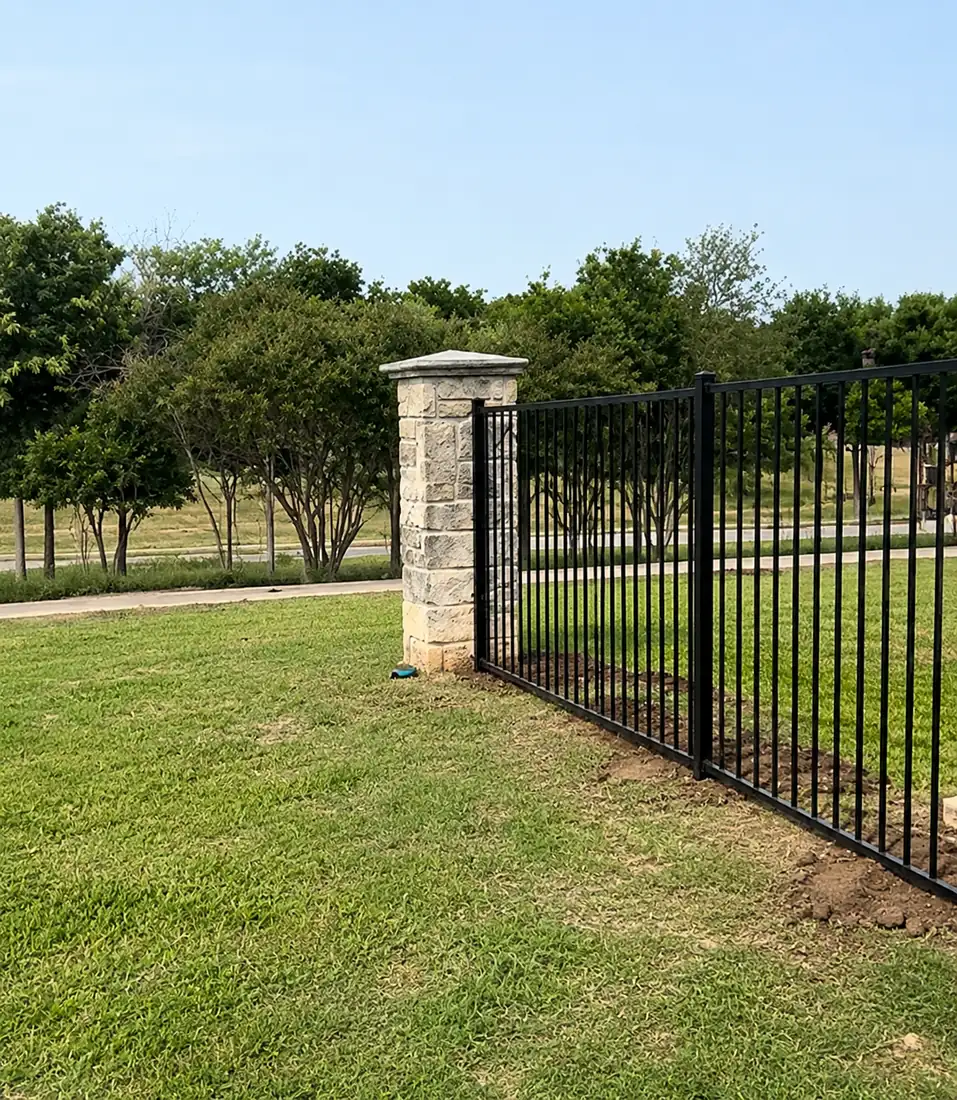
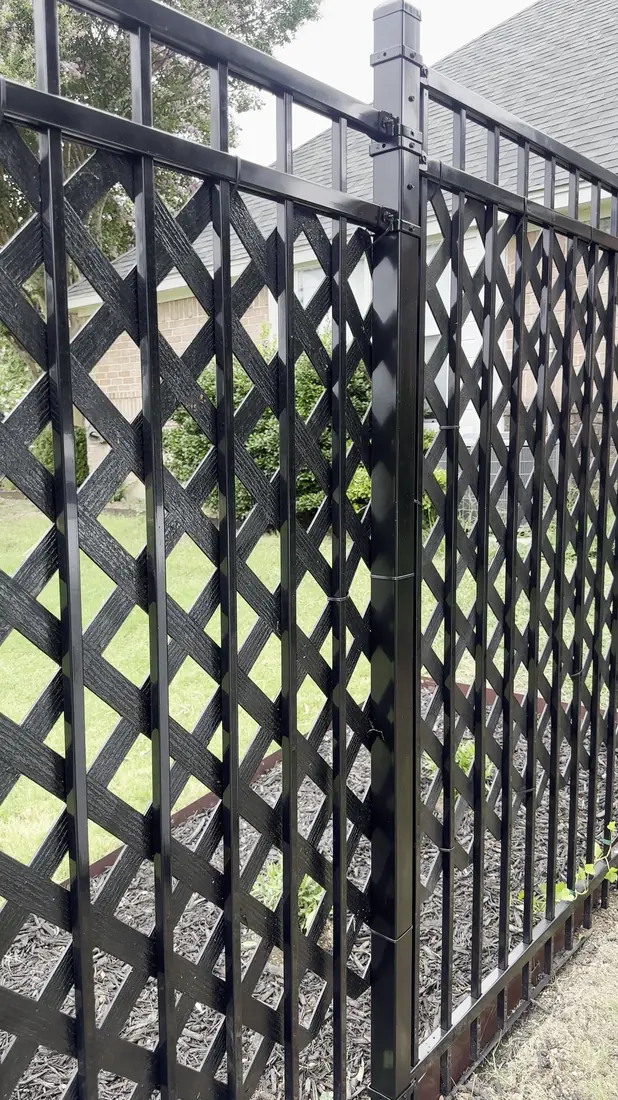
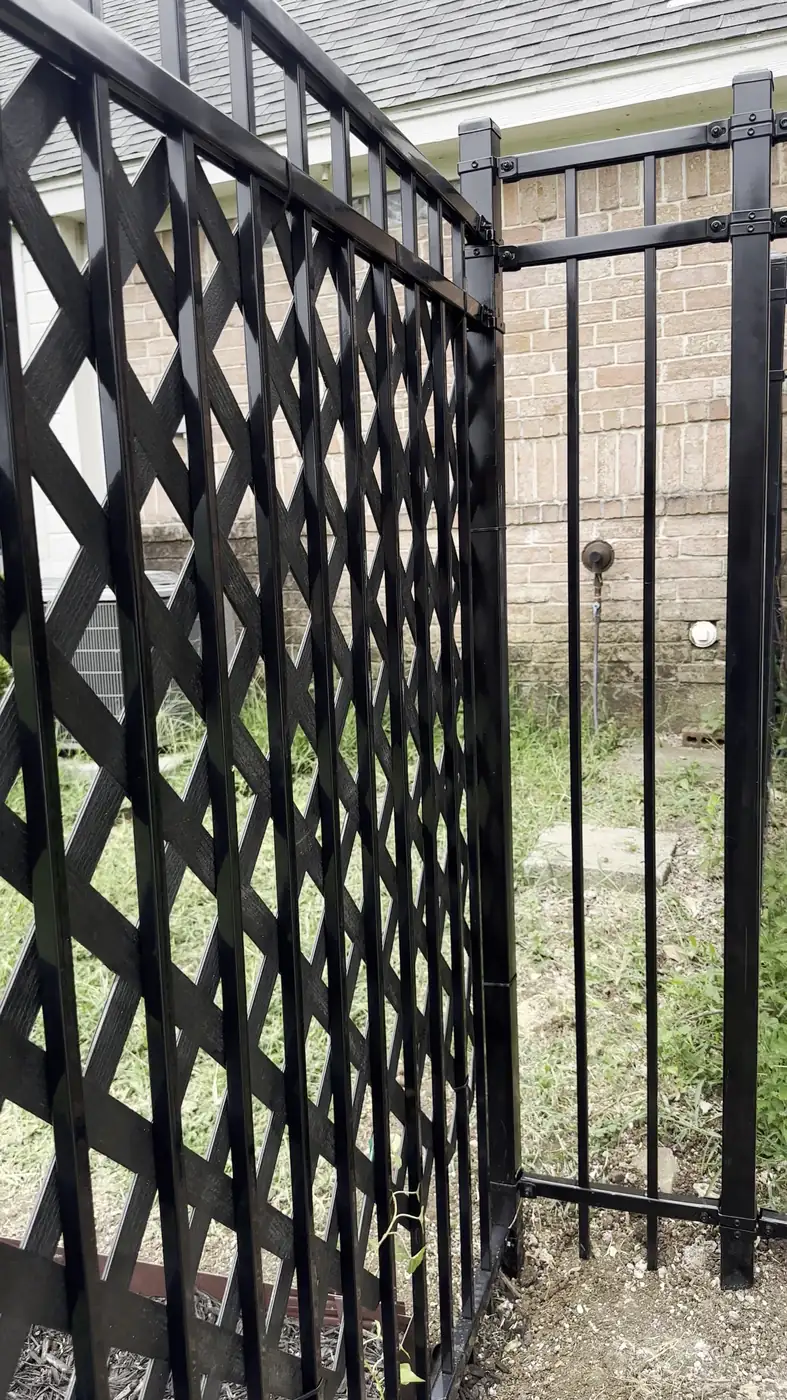
The panels are flat top with three rails and an extended bottom, finished in black. The rear run ties into two existing
stone columns already on the property, so the new fence reads as though it was designed with them rather than
added to them. Because the material is rackable, each panel flexes to follow the ground contour instead of stepping,
which keeps a continuous line across the gently sloping lawn.
Scope and Deliverables
• Site assessment: The existing fence line, the two stone columns, the sloping lawn, and the greenbelt boundary
were reviewed before installation.
• Utility marking: Texas 811 was called to mark public utilities before any post holes were dug, per the contract
terms.
• Fence removal: The existing wood fence was removed and hauled off the property.
• Post installation: New posts were set across all three runs.
• Rackable panel installation: Flat-top panels with three rails were racked to follow the ground contour along the
sloping lawn.
• Column tie-ins: The rear run was fitted to the two existing stone columns at each end.
• Extended bottom detail: Panels were specified with an extended bottom, so the pickets continue below the
bottom rail and reduce the gap at grade.
• On-site welding: Welding was performed on site to fit the panels and posts to the run.
• Gate installation: One wrought iron gate was hung with a latch.
• Black finish: The fence and gate were finished in black.
• Final cleanup: The work area was inspected and cleaned after installation.
Timeline and Quality
At 8 feet, a fence stops being a boundary marker and becomes a structure. The panel catches meaningfully more wind
load than a 6-foot fence, which is why the posts here are galvanized steel set to a string line rather than wood set by
eye. The photos of the post stage show the line pulled taut across the full run before a single picket went on — that
sequence is what keeps an 8-foot fence from reading as a series of slightly different heights once it is stained.
The cap and double trim detail is the visible difference on this build. A single trim board under the cap is standard; the
second board adds depth to the top edge and gives the fence a heavier line, which suits an 8-foot height where a thin
top rail can look undersized. The side yard added its own constraint: HVAC condensers and pool equipment sit close
to the fence line, so the run had to be set to keep service access clear.
Outcome and Benefits
• Preserved view: Vertical iron pickets secure the yard while keeping the greenbelt and mature trees visible from
the lawn.
• Continuous grade line: Rackable panels follow the slope instead of stepping down in visible increments.
• Reduced bottom gap: The extended bottom keeps openings at grade small along uneven ground.
• Longer service life: Iron does not gray, warp or rot the way the wood fence it replaced had begun to.
• Integrated with existing masonry: The rear run ties into the two stone columns already on the property.
• Lower maintenance: A black iron fence needs no staining or picket replacement on a wood fence’s cycle.
• More usa